For the Logent Group, sustainability is not only about climate and economy – it’s about people. With “People” as one of three strategic focus areas (People, Planet, Partner), the company has made social inclusion, diversity, and safe working conditions part of its business model. Every year, hundreds of individuals with different backgrounds, ages, and circumstances take their first steps into working life through Logent.
Facts: Social Inclusion in Numbers – Logent 2024
| Key indicator | Result |
| Total number of employees | Approx. 3 000 across six Northern European countries |
| Share of employees under 30 yearsLogent as firts employer | 50,8 %908 people (2024) |
| Employees from special target groups through social inclusion | 1 601 people since 2017 |
| Employees with functional variationsUkraine initiative (2024) | 25 people in 2024/150 people since 2017110 people |
Source: Logent Annual and Sustainability Report 2024
Human-centered logistics
Social sustainability is an integral part of Logent’s business strategy. Since 2017, Logent has actively collaborated with public agencies, municipalities, and local organizations to build bridges into working life for newcomers, first-time job seekers, and people with different functional abilities. This effort has delivered tangible benefits for Logent, its customers, and society at large.
How Logent and NAV build bridges to employment
For Logent, cooperation with public actors such as Arbetsförmedlingen in Sweden and NAV in Norway is a cornerstone of its social sustainability work. Giving more people real access to working life requires interaction between employers, authorities, and the candidates themselves – a tripartite collaboration that NAV describes as “invaluable.”
“To succeed with inclusion, it is crucial to have close and good cooperation with employers while safeguarding job seekers’ needs and resources,” says Haris Bahtijaragic, Market Advisor at NAV.
According to NAV’s employer survey, 75% of employers report positive experiences with work inclusion, and 68% believe it pays off for the business. NAV emphasizes the importance of structured collaboration between employer, employee, and NAV. Through ongoing dialogue and follow-up, the parties ensure that the employer’s resource needs, the job seeker’s conditions, and society’s interests are well taken care of.
“NAV can offer various measures tailored to the individual, such as inclusion grants, mentoring schemes, and wage subsidies. In addition, NAV has a dedicated department that assists with adaptations and aids so that participants have the best conditions to succeed in the job,” explains Bahtijaragic.
For Logent, this is about turning words into action.
“This often involves quite simple adjustments, but often no special adaptation at all. The most decisive factor is actually close practical follow-up during the employment process, especially in the early stages,” comments Henriette Lundin, CSR Manager at Logent Norway.
.jpg?width=1600&height=900&name=Nimet%C3%B6n%20malli%20(1).jpg)
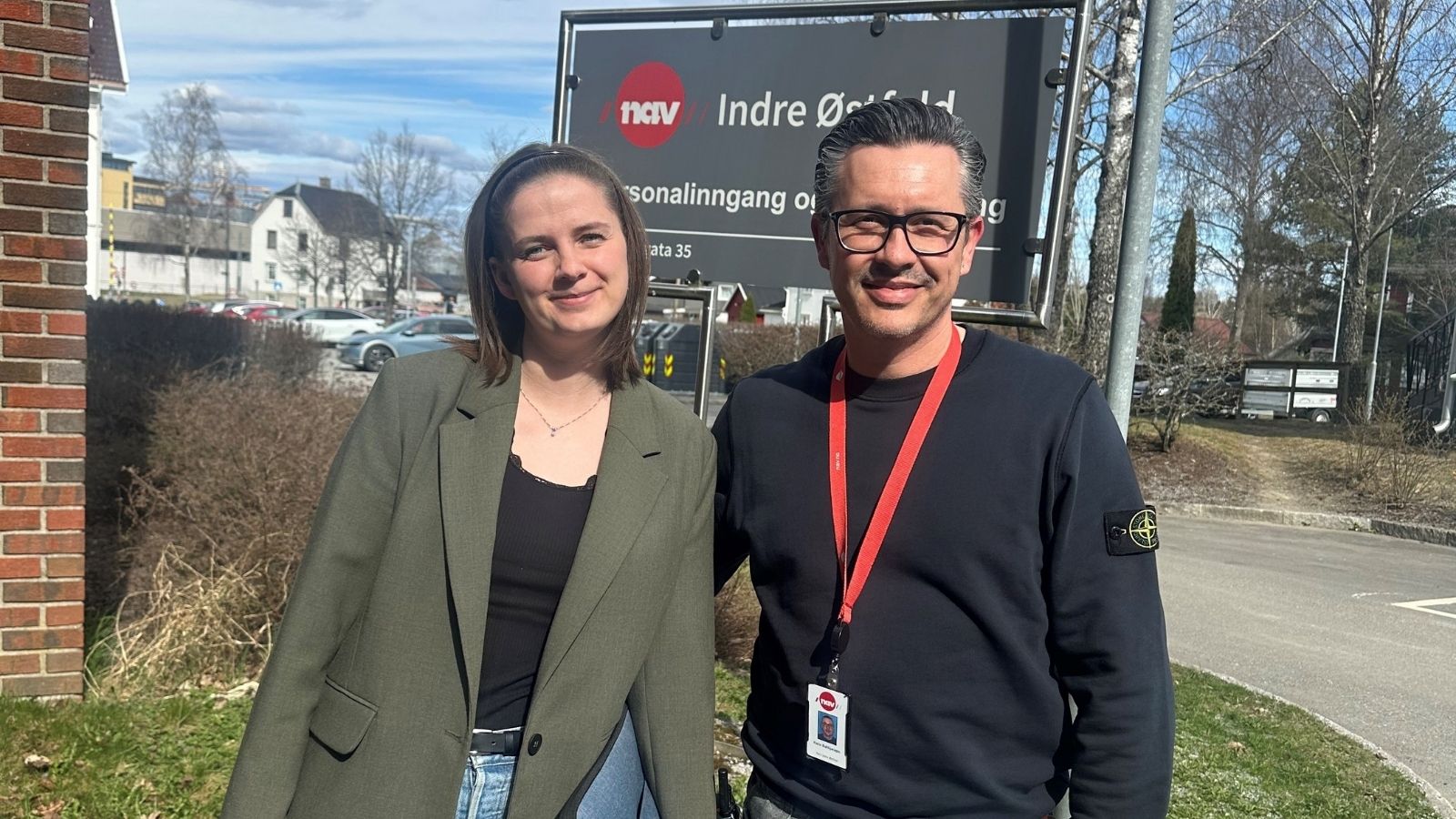
Henriette Lundin from Logent, together with Haris Bahtijaragic, emphasize that good collaboration is the key to success.
Logent as an inclusion partner
Collaboration with NAV makes it possible for Logent to identify and adapt jobs for people with different needs and backgrounds. Many of the company’s employees come through such partnership programs, and Logent’s CSR Manager in Norway, Henriette Lundin, emphasizes the importance of thorough training and mentor support during the start-up phase.
“Our success is about people – colleagues and customers who share the belief that sustainability and profitability go hand in hand. When we work toward common goals with openness and a willingness to think differently, good things happen,” Lundin continues.
In 2024, this was evident in the company’s results:
- 908 new start jobs through various inclusion measures
- 110 Ukrainian refugees employed via partnerships with local actors
- 25 people with functional variations received adapted jobs through follow-up in collaboration with NAV, Arbetsförmedlingen, and other public agencies
Logent’s management describes cooperation with public authorities as an example of how social sustainability can be transformed into lasting value – not only for individuals but for working life as a whole.
“Collaboration with Arbetsförmedlingen, NAV, and other actors is a success factor for all parties. It’s about lowering the threshold for entry, but also about building competence and developing people’s sense of mastery, which provides a good foundation for staying in working life,” says Camilla Källvik, VP People & Corporate Affairs, Logent Group.
The road ahead – Social sustainability as a competitive advantage
Logent Group’s work on social sustainability has already delivered clear results – both in measurable figures and personal stories. But the group emphasizes that this is just the beginning. In its sustainability strategy toward 2030, Logent aims to strengthen its contribution to an inclusive working life throughout the Nordic region and integrate social sustainability even more closely into business development.
“We want to be an attractive and safe workplace for everyone, with a focus on diversity, equality, and inclusion,” continues Källvik.
This ambition is built on three pillars:
- People – development, diversity, and safe working conditions for all employees
- Planet – responsible resource use and reduced environmental footprint
- Partner – collaboration with customers, suppliers, and public actors to promote sustainability in the value chain
Within the “People” area, Logent plans to further develop cooperation with Arbetsförmedlingen / NAV and other labor market actors in countries where Logent operates. The goal is to create even more jobs for people who are outside working life.
“We see social sustainability as a natural part of how we run our business. For us, it’s the path to long-term and meaningful results,” concludes Camilla Källvik.
Logent shows that the logistics of the future is not only about the flow of goods but also about the flow of ideas, strong partnerships, and inclusive value creation.